
GDSN meaning: What is the Global Data Synchronization Network?
The Global Data Synchronization Network (GDSN) is a standardized, secure network that connects trading partners through a system of certified data pools. It enables the automatic exchange of real-time, synchronized product information, ensuring that everyone in the supply chain has access to accurate and consistent data at all times.
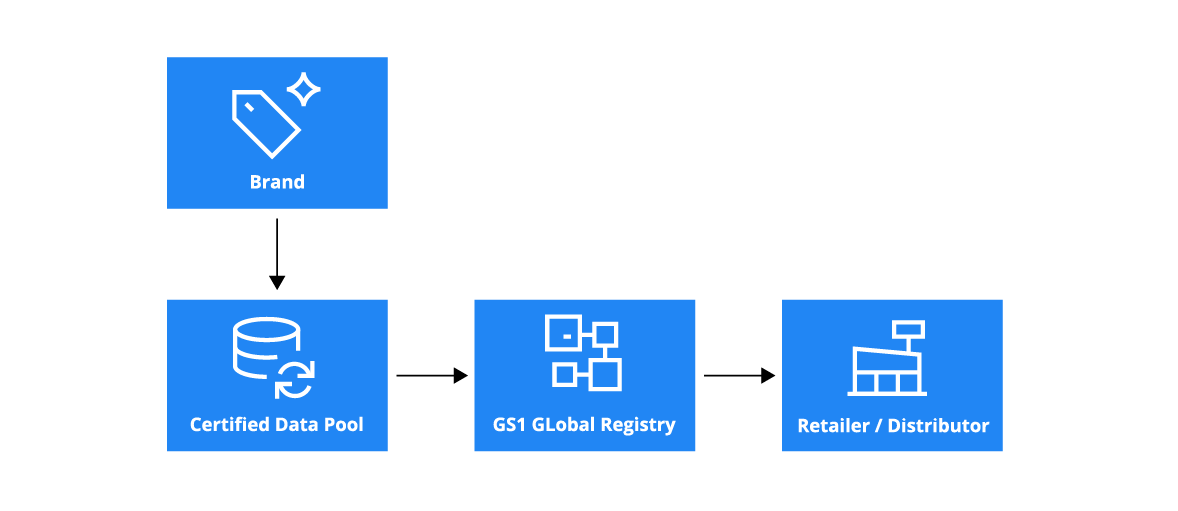
In plain terms, GDSN means trading partners don’t have to chase spreadsheets, send repeated file updates or worry about conflicting product specs. Instead, a brand uploads product data to a certified data pool, which validates the information and shares it through the GS1 Global Registry. From there, subscribed retailers and distributors receive real-time updates, whether it’s a size change, a packaging update or a compliance attribute.
This is the foundation of global data synchronization: one product record, shared automatically, updated instantly and trusted by all parties involved.
Why GDSN was created and who it’s for
The Global Data Synchronization Network was developed by GS1, the same organization responsible for creating the barcode. As product data became more complex and more digital, GS1 introduced GDSN to solve a growing problem: how to ensure every trading partner works from the same accurate set of product information, no matter the category, channel or market.
GDSN is built for companies that need to scale clean, compliant data across a network of suppliers, retailers and systems.
That includes:
Manufacturers managing thousands of SKUs in food, fashion and consumer electronics
Retailers and distributors dealing with constant product updates, new assortments and global compliance
Logistics and supply chain teams coordinating across multiple systems and regions
It’s already in use across key industries:
Grocery companies use GDSN to distribute verified nutrition, allergen and packaging information across store formats and regions
Consumer packaged goods brands rely on it to sync product updates between internal systems and ecommerce channels
Fashion and footwear manufacturers apply it to manage seasonal drops, style codes and material attributes across wholesale and retail partners
GDSN is designed to make global product content as reliable and standardized as a barcode, only smarter and constantly up to date.
How GDSN works: A step-by-step explanation
At the core of GDSN is a structured system that ensures product data flows accurately and instantly between trading partners. It relies on global identifiers and certified infrastructure to validate, store and distribute information at scale.
Key components of GDSN
GTIN (Global Trade Item Number): A globally unique identifier for each product
GLN (Global Location Number): Identifies the location or company associated with the data
Article master data: Core product details (e.g., dimensions, ingredients and regulatory info) that need to stay consistent
Data pools & GS1 Global Registry: Certified repositories that validate and synchronize data using GS1 standards
The GDSN process:
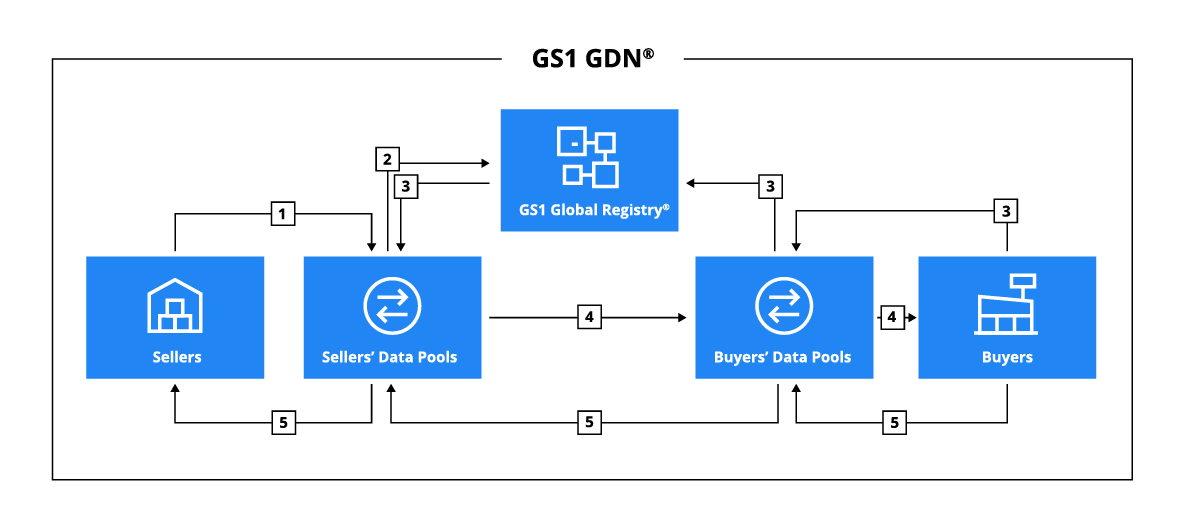
Step 1:
The brand or manufacturer uploads validated product and company data to its certified data pool.
Step 2:
The data pool shares key information, such as product identifiers and company details, with the GS1 Global Registry. This registry acts as a central index for locating data across the GDSN.
Step 3:
The information recipient (such as a retailer or distributor) subscribes to the data through its own data pool. This subscription request is routed through the GS1 Global Registry to the supplier’s data pool.
Step 4:
The supplier’s data pool detects a match between the publication and the subscription request, referred to as a “pub-sub match.” It then sends the relevant product data to the recipient’s data pool, which publishes the synchronized information to the recipient.
Step 5:
The recipient reviews the data and sends an acknowledgment message back to the supplier via the original data pool, completing the data exchange loop.
This publish-and-subscribe mechanism ensures that all parties receive the most accurate, real-time product data, automatically and consistently.
Key benefits of GDSN for modern businesses
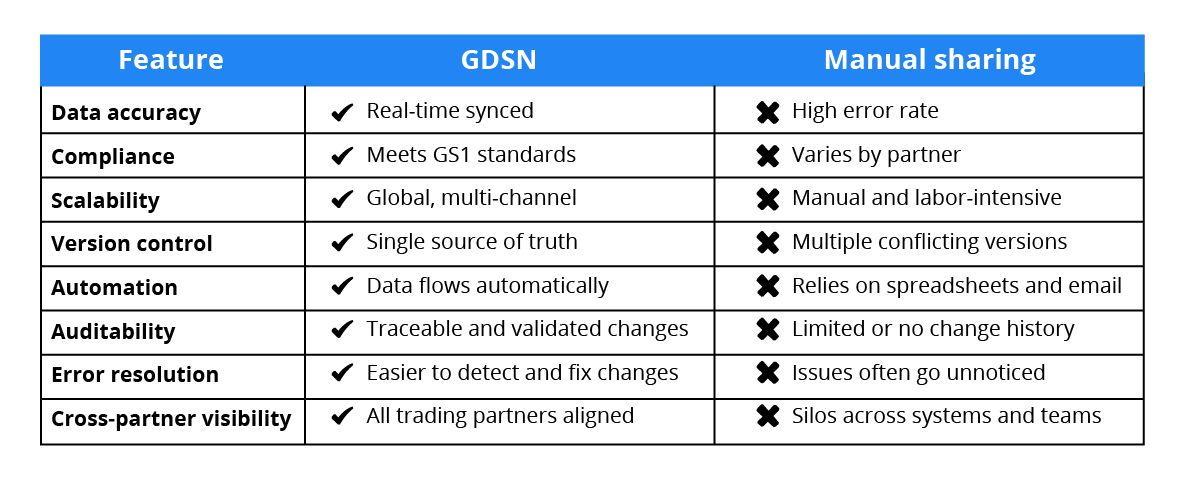
GDSN removes friction for manufacturers, retailers and supply chain partners by streamlining product data from entry to shelf.
Real-time updates:
Automatic data sync reduces manual entry, errors and duplication across systems.
Fewer chargebacks:
Validated data supports retailer and regulatory compliance, helping avoid rejections and penalties.
Greater supply chain efficiency:
Synchronized data improves coordination across suppliers, distributors and logistics teams.
Faster time to shelf:
Automated exchange supports faster activation across sales channels.
Built-in compliance:
GDSN supports industry requirements in food, pharma and retail, ensuring consistency and traceability.
How to get started with GDSN
Implementing GDSN begins with a clear understanding of data requirements and internal readiness. A structured approach helps ensure long-term scalability and compliance.
Define trading partner requirements:
Identify which retailers, distributors or channels require GDSN participation. Requirements vary by market and product type.
Select a GS1-certified data pool:
Select a GS1-certified data pool that supports your target markets and integration requirements. Systrion's GS1-certified GDSN data pool, together with the Centric PXM™ connector, provides an efficient way to publish and synchronize trusted product information with trading partners.
Prepare standardized product data:
Ensure product data is accurate, complete and GS1-compliant, including GTINs, GLNs and key attributes.
Assign internal ownership:
Appoint dedicated roles such as data stewards or PIM managers to oversee quality, governance and publishing.
Common pitfalls to avoid:
Disorganized or inconsistent product taxonomy
Incomplete or outdated product records
Unstructured formats that cannot be validated
Lack of internal coordination or clear accountability
Choosing the wrong data pool provider
Underestimating ongoing maintenance
With foundational systems in place, companies can activate GDSN to support efficient product data exchange and improve accuracy across the value chain.
How GDSN works with PIM
A modern Product Information Management (PIM) system serves as the central source of truth for product content. It consolidates data from multiple departments and systems, like marketing, regulatory, supply chain and ensures that product information is complete, validated and ready for distribution.
GDSN complements PIM by serving as the delivery mechanism for that data. Once product records are structured and enriched in the PIM, GDSN-certified data pools can syndicate that information in real time to trading partners, ensuring consistency across markets and systems.
Centric PXM™ and its AI-powered PIM solution supports GDSN integration by enabling teams to manage, validate and publish GS1-compliant product data from a centralized platform. This approach eliminates duplication, accelerates time to shelf and ensures every stakeholder, from retailers to logistics partners, works from the same accurate record.
Key Centric PIM capabilities supporting GDSN success include:
Governance tools to enforce data quality standards across teams and workflows
Automated workflows that streamline product data validation and publishing
Validation checkpoints to catch and resolve issues before data reaches GDSN-certified pools
Advanced taxonomy management to structure products consistently across hierarchies
Attribute mapping aligned with GS1 requirements for compliance and accuracy
Integration with PLM and syndication systems to maintain consistency and reusability across all channels
From creation and enrichment to syndication and compliance, PIM and GDSN create a complete product content lifecycle.
Industries using GDSN today
GDSN adoption is growing across industries where speed, accuracy and compliance are critical to product success. It plays a central role in streamlining product content across supply chains and sales channels.
Retail:
In grocery, big-box and fashion retail, GDSN ensures that product attributes such as size, ingredients, pricing and sustainability claims are consistent across in-store, online and partner platforms. It reduces shelf delays, improves compliance and supports omnichannel accuracy.
Consumer Packaged Goods (CPG):
CPG brands use GDSN to synchronize high volumes of product data with multiple retailers and marketplaces. From packaging updates to regulatory compliance, GDSN supports faster product launches and fewer chargebacks across mass retail and e-commerce.
Why GDSN is a critical supply chain tool
GDSN is foundational for operational accuracy, regulatory compliance and faster time to shelf. In sectors like retail and CPG, where product data moves across multiple systems, teams and trading partners, standardization is essential.
By aligning all parties around a single, validated version of product truth, GDSN reduces errors, accelerates shelf readiness and supports global scalability. It enables businesses to stay competitive in increasingly regulated and data-driven environments.
To learn how GDSN fits into a broader product content strategy, connect with Centric Software®. Our experts can help implement a GDSN-ready workflow through integrated PIM and PLM solutions built for scale, speed and compliance.
Simplify GDSN Publishing with Centric PXM and Systrion
While GDSN provides the framework for exchanging standardized product information, organizations still need an efficient way to manage, validate and publish product data across their trading network.
That's why Centric PXM™ now connects to Systrion's GS1-certified GDSN datapool.
With this new capability, organizations manage product information, validate data and synchronize trusted product content across manufacturers, distributors and retailers from a single platform. By combining product information management with direct GDSN connectivity, teams reduce manual effort, accelerate retailer onboarding and support compliance requirements more efficiently.
The result is a streamlined workflow for exchanging accurate, consistent product information, which empowers organizations to improve data quality, reduce errors and bring products to market faster.
Connect Centric PXM to Systrion's GS1-certified GDSN datapool
Designed for regulated or retailer-driven markets.