

 Centric PLM
 Centric Planning
 Centric Pricing & Inventory
 Centric Market Intelligence
 Centric Visual Boards
 Centric PXM
 Experience Academy


 Fashion & Apparel
 Retail
 Footwear
 Outdoor & Sports
 Consumer Goods
 Manufacturers
 Home Décor & Furniture
 Food and Beverage
 Grocery Retail
 Cosmetics & Personal Care
 Consumer Electronics







Retailers are Crafting Private Label Advantage With PLM
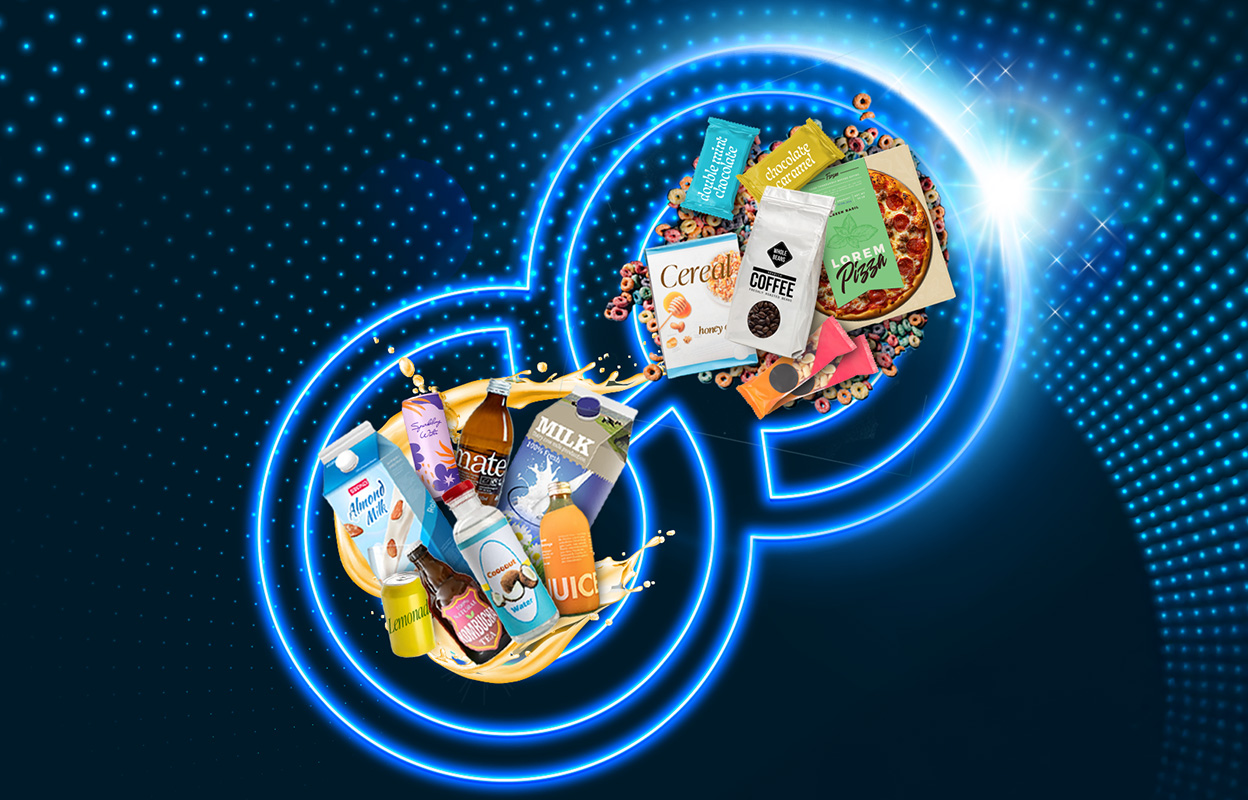


For grocery retailers, today’s private label story is no longer simply about providing an acceptable value alternative for shoppers. Store brand products have become far more strategic for building consumer connection, achieving operational excellence and driving profits.
On a recent Lunch & Learn webinar, Centric Software thought leaders explored the evolving significance of private label programs against the backdrop of macroeconomic challenges and rising product expectations.
“Inflation is the number one issue right now when we’re talking about grocery and food,” said Reid Swanson, Vice President Grocery Retail Sales.
“This isn’t new to you, especially if you’re from the industry, but even as a consumer, everybody is feeling it.”
He cited recent Bureau of Labor Statistics (BLS) data that reveal food price increases have tapered off some in 2025, but the cumulative impact over the past five years in grocery adds up to 28 percent. Takeout food costs rose 33 percent over the same time span.
“As a consumer it is often a shock,” Swanson said. “If their income is not rising proportionately to inflation, then they’re going to be spending a higher percentage of their disposable income for food.”
In fact, he noted, American’s food spending share of disposable income is presently at 11.3 percent, the highest level since 1991.
“So many people within the younger generations have never experienced food being quite this expensive as a percentage of overall income,” he said.
Signs of behavior changes
Rising cost is not the sole factor driving consumer behavioral change, said Julia Gregory, Principal Product Manager at Centric Software.
“We’d be remiss not to mention the impact of GLP-1inhibitors on the appetites of Americans,” she said. “One in eight people have tried these weight loss medications, and that’s changing consumer tastes and preferences. It may even affect the amount of time they spend in the grocery store.”
Swanson observed that the combination of economic pressures and changing dietary preferences may bring enduring changes in consumer habits. “From a marketing perspective, usually, you don’t try to convert new consumers after the age of 30 or 35. Now, because of what’s going on in the industry, it’s really forcing change.”
He cited recent news coverage which documented more shoppers have embraced so-called “hard discounters” with high private label emphasis, like Aldi, in their pursuit of better-priced groceries. Major national food brands are also feeling the pressure, as the Wall Street Journal reported, “Consumers Fed Up With Food Costs Are Ditching Big Brands.”
Swanson added, “This is this huge opportunity where people are really altering their behavior based on external factors in a way that we really haven’t seen in the past.”
The shift to private label products is broad-based, but more pronounced in certain CPG categories than others, he noted, sharing recent data from NIQ that documented a spending shift in categories like dish care, home air fresheners, and pasta, rice, dry beans and grains.
Overall store brand penetration in the US is expected to reach 21.2 percent of dollar sales in the U.S. in 2025, Private Label Manufacturers Association (PLMA) reports. While significant, that’s about half of the average across Europe, where private label products account for more than 40 percent of sales.
Said Swanson, “We see some great growth here. But this is really compelling because this helps the U.S. market benchmark against Europe. Consumers are willing to do much more, but how do you drive those consumers, as food retailers, to select our products so that you can benefit?“
Generate strategic private label growth
The presenters outlined what they called a “Strategic Profit Engine” for private label, that can deliver benefits on three fronts: stronger shopper loyalty and differentiation; higher margins and pricing flexibility; and the ability to rapidly capture new category opportunities.
“If you read through most financial reports of the grocery retailers, especially the bigger ones that are on the stock market, they’re all talking about the strategic initiative to build out their private label, to build out that loyalty, to build out really that customer value and their brands,” Swanson said.
Quality as a path to loyalty and identity
The role of store brands is changing, Gregory said. “In the early days of private label, a lot of retailers were accustomed to doing a white label for some other manufacturer’s product. Today, keeping a view towards strong shopper loyalty is how you can really differentiate yourself as a private label.”
That situation has evolved considerably in the era of widespread loyalty card enrollment, she said. “Retail organizations use them to purchase behavior over time. And I think it’s easy to look at loyalty as this like one-dimensional thing.”
She cited results from a study published in Science Direct that examined consumer loyalty to CPG brands and its relation to brand equity.
“The researchers found a nexus of both really high love with really high loyalty within the purchasing behavior. There was also a really high knowledge of the brand. Everyone was aware of it. They knew the names. They knew about it.”
She added, “What was really telling is how important perceived quality was. It was higher across all shopper segments. Even among low love, low loyalty, the perceived quality needed to be pretty high.”
PLM powers your private label story
Swanson continued, “Then you get to some things you might not have thought about before. Like speed to market. How do you shorten your time to really make sure you’re getting that product as quickly as possible to the consumer?”
He added, “It’s so important to build it out, to really make sure because that’s what’s going to drive growth in your private label. That’s what’s going to drive the profitability.”
In his discussion, he defined four dimensions where a Product Lifecycle Management platform can be essential to building and maintaining a store brand program that delivers high quality and attracts shopper loyalty:
- Speed to market
- Quality and Compliance
- Innovation Enablement
- Operational Efficiency
Centric PLM™ enables the multi-factor product development process to be managed in an orderly, holistic fashion, he said. It enables retailers to define and maintain exact product attributes from source to production.
“It’s the people, it’s the process and the technology to support that, to really be an enabler for your strategic initiatives,” Swanson said.
He added, “When you build up your own brand with private label, that’s going to not just capture the consumer when money is tight. You’re actually building up your own brand loyalty. You’re building up that customer relationship where people are coming to your store for your products.”