

 Centric PLM
 Centric Planning
 Centric Pricing & Inventory
 Centric Market Intelligence
 Centric Visual Boards
 Centric PXM
 Experience Academy


 Fashion & Apparel
 Retail
 Footwear
 Outdoor & Sports
 Consumer Goods
 Manufacturers
 Home Décor & Furniture
 Food and Beverage
 Grocery Retail
 Cosmetics & Personal Care
 Consumer Electronics









How Food & Beverage Businesses Can Prepare for the EU’s New PPWR Now
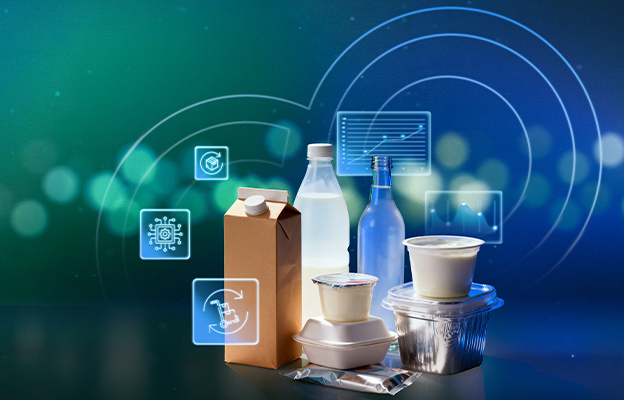


The European Union’s Packaging and Packaging Waste Regulation (PPWR) marks one of the most consequential shifts in environmental regulation affecting private-label products and food and beverage (F&B) companies in decades. Designed to eliminate waste, transform packaging sustainability and harmonize standards across Europe, PPWR will impact every step of the product lifecycle, from design and sourcing to production, labeling and go-to-market execution.
For private-label manufacturers (PLMAs) and F&B manufacturers already operating in an increasingly complex regulatory and competitive landscape, the stakes are high: Non-compliance isn’t just a regulatory risk — it’s a business continuity risk.
What is PPWR and why now?
PPWR replaces the long-standing Packaging and Packaging Waste Directive with a directly applicable EU regulation, meaning the same rules apply uniformly across all EU member states without national interpretation or delay.
Its overarching ambition is clear: To decouple economic growth from packaging waste, ensure packaging is fit for a circular economy and improve transparency across packaging value chains. The evidence for stronger guidelines on packaging and packaging waste is clear: In 2023, 79.7 million tons of packaging waste were generated in the EU, corresponding to 177.8 kg per inhabitant. Moreover, plastic packaging recycling rate in 2023 was 42.1%, highlighting that actions are needed towards a circular economy.
In practice, PPWR introduces binding requirements around:
- Packaging (waste) reduction
- Reuse and refill
- Recyclability and use of recycled materials
- Restriction of hazardous substances
- Harmonized labeling and reporting
The reality for F&B:
With phased implementation starting from 2026 and increasingly strict targets toward 2030 and beyond, PPWR is not a one-off compliance exercise — it is a structural shift that demands long-term operational and digital readiness, particularly for private-label and F&B manufacturers portfolios with high SKU complexity.
What PPWR Really Means for the Industry Today
For private-label and F&B manufacturers, PPWR translates regulatory ambition into concrete operational obligations across the full product lifecycle. A critical milestone is the Declaration of Conformity required by August 2026, which obliges companies to demonstrate at product and packaging level that PPWR requirements are met based on verifiable data, requiring organizations to start acting now.
Meeting the Declaration of Conformity is not a one-off exercise, but requires structured data, traceability, and governance to be embedded across product design, sourcing, compliance and reporting. Establishing this foundation today is essential to ensure products can continue to be placed on the EU market and to identify where corrective actions are needed across the portfolio, for example:
All packaging needs to be recyclable at end-of-life, in addition there are reusability targets for certain beverage categories, and up to 100% reusability targets for transport packaging depending on type and destination.
Design for reuse and recyclability
Action Item: This means that product and packaging engineers must rethink materials, infrastructure , and product lifecycles and start tracking recyclability and reuse performance at packaging level today.
Recycled material requirements
Minimum recycled content thresholds apply across packaging types and increase over time, with the requirement that recycled content is post-consumer recycled.
Action Item: sourcing teams need to validate suppliers, manage traceability of recycled material sources and build confidence in declared specifications.
Substances of concern
Packaging must comply with strict limitations on substances of concern, including hazardous chemicals impacting health, food safety, and recyclability.
Action Item: Greater transparency on material composition, supplier disclosure and control at packaging-component level.
Harmonized labeling
Uniform labeling requirements and recyclability scores make reporting both more structured and more demanding.
Action Item: Compliance functions require better data governance and oversight.
EPR and economic responsibility
Producers share financial and operational responsibility for the management of packaging waste under harmonized EPR schemes across the EU, with eco-modulated fees increasingly linked to packaging characteristics and recyclability performance.
Action Item: Cross-functional alignment between product, supply-chain and finance is essential, as packaging decisions directly influence cost, compliance and margin.
Where Traditional Approaches Fall Short
For many F&B companies today, key product information is fragmented across spreadsheets, ERP reporting forms or systems, siloed databases and manual processes. This lack of a “single source of truth” leads to:
- Unclear visibility into packaging specifications
- Slow cross-functional collaboration
- Manual (compliance) reporting that is prone to error
- Reactive rather than proactive risk mitigation
In the face of PPWR’s new requirements, these legacy approaches simply won’t scale.
The Competitive F&B Advantage: A Centralized, AI-driven PLM
The regulatory demands of PPWR aren’t just data requirements, they’re business transformation catalysts. Organizations that invest in a modern Product Lifecycle Management (PLM) platform, enabled by AI, advanced workflow orchestration and real-time data integration, unlock strategic advantages:
360° visibility across product & packaging data
- Centralized control over product specs, packaging attributes, sustainability metrics and compliance documentation.
- Enable real-time visibility for all stakeholders.
- Automatically flag packaging that fails PPWR criteria before it reaches production or the market with AI-assisted data validation and classification.
Faster collaboration between teams
- AI-powered workflows accelerate engagement between R&D, procurement, quality & regulatory, supply chain, marketing and external partners
- Packaging choices become transparent and traceable from inception to launch.
Continuous compliance & risk mitigation
- Modern PLM embeds regulatory tracking and reporting into everyday processes
- Automated alerts, version control and audit trails make reporting efficient and defensible.
Innovation with resilience
- Assess implications of packaging innovations before committing to materials or suppliers with AI-powered predictive analytics and scenario planning.
Turn Regulatory Hurdles Into Opportunities for Sustainable Product Leadership
Centric Software®’s PLM solution provides a centralized system for managing product and packaging information across the entire portfolio. By creating a single source of truth for specifications, materials and sustainability data, Centric PLM™ enables organizations to:
- Consistently assess PPWR requirements across products, categories and markets
- Configure workflows
- Automate validations
- Integrate audit trails
- Reduce manual reporting effort
- Improve cross-functional collaboration
- Embed PPWR compliance into day-to-day product development
- Maintain agility
- Support ongoing innovation
Deloitte + Centric Software: Insights to Get Ahead
Deloitte’s market expertise in regulatory strategy, product compliance frameworks and packaging sustainability provides practical guidance on:
- Interpreting PPWR’s phased deadlines and obligations,
- Translating compliance risks into operational strategies
- Optimizing cross-functional readiness across the enterprise.
Combining Deloitte’s business advisory insights with Centric’s product data management and AI-augmented PLM technology creates a powerful, practical roadmap for PLMAs navigating this transition.
PPWR is Your Business Inflection Point
PPWR represents a watershed moment for the private-label industry. Organizations that treat it as a “compliance task” will struggle. Those that embrace it as an impetus for digital transformation and stronger product governance will thrive.
The future of the food & beverage won’t be shaped by packaging alone — it will be shaped by how companies manage product data, collaboration, compliance and continuous innovation.
Modern PLM solutions make that future attainable right now.
Join Us: Decode PPWR and Prepare to Win
In May 19 at Huis Bartolotti in Amsterdam, Centric Software and Deloitte are hosting an exclusive event for F&B leaders to:
- Explore the full implications of PPWR for the private label sector
- See real use cases for centralized PLM in managing compliance and innovation
- Hear from peers, analyst and PLM practitioners
- Walk away with actionable strategies for 2026 and beyond
Date: May 19th, 6:00 — 10:00 p.m.
Location: Huis Bartolotti, Amsterdam