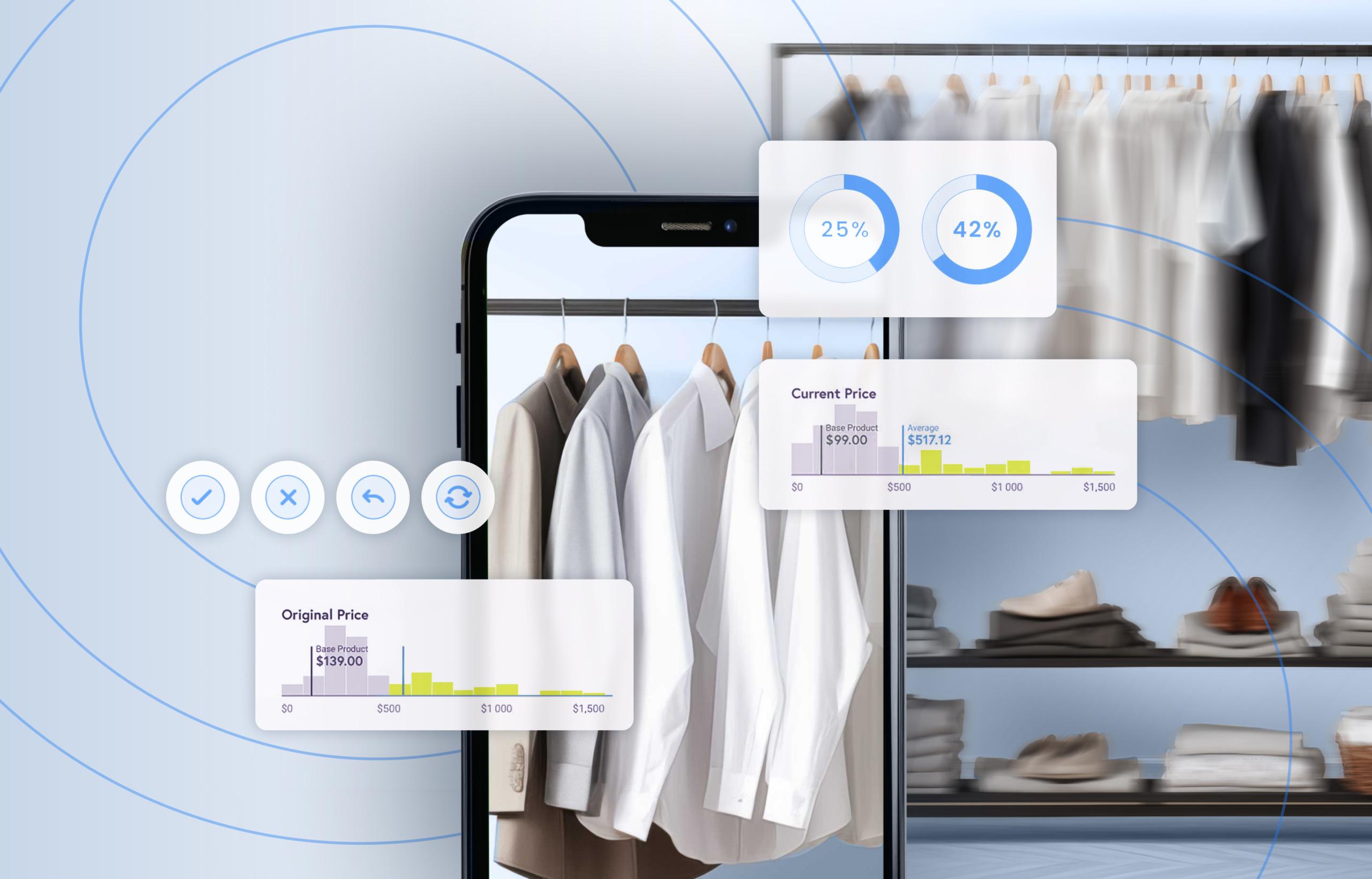
Trend 1: AI and ML will take center stage
In 2023, generative AI emerged as a dominant force, capturing headlines and taking over conversations across all levels of business. Yet, in the retail and fashion industry, companies have only just started scratching the surface when it comes to AI and ML’s game-changing potential. From cost structures to shopping experiences, AI is projected to dramatically impact retail and hit a whopping $24.1 billion by 2028, boasting an impressive annual growth rate of 24.4%.
In our comprehensive report, our experts delve into how AI and ML can be leveraged through various technologies to bolster business in many different areas. For design teams, generative AI can enhance ideation and innovation. For product development, smart image recognition solutions such as Centric AI Image search, can streamline material sourcing, reducing costs. In buying and merchandising, AI tools enable informed decision-making, optimising inventory and boosting sell-through. Additionally, predictive pricing automation platforms increase revenues, improve margins, and reduce discounting in pricing strategies.
With fashion and retail companies already witnessing the benefits of AI and ML across all departments, there’s no doubt that they will continue to implement these ground-breaking technologies to fuel growth and innovation in 2024.
Trend 2: Sustainability efforts will intensify
Increased consumer demand for greener products and stricter incoming regulations mean fashion and retail businesses will have sustainability-focused agendas in 2024. Legislation in the EU set ambitious targets for emissions reduction and climate neutrality, while national governments in France and Germany recently introduced laws to promote circular economies and protect human rights and the environment.
To achieve sustainability goals, companies will turn to technology more than ever. Innovations like Centric PLM™ enable fashion brands and retailers to centralise and manage sustainability data. This includes calculating carbon footprints using specialised databases, certifying supply chains in real-time, achieving circularity through closed-loop models, embedding social responsibility, conducting factory audits and monitoring and reducing packaging waste. These technological advancements will empower teams to meet eco-friendly objectives at every stage of the product lifecycle, aligning with the growing emphasis on sustainable practices in the industry in 2024.
Trend 3: Pricing and promotion strategies will shift
Tighter consumer purse strings, fluctuating inflation and uncertainty in the markets is setting the scene for a challenging 2024. To navigate these challenges, businesses will turn to new pricing and promotion strategies, with a widespread intention to increase prices and a shift towards dynamic pricing and personalised promotions. AI and ML-integrated technologies will be fundamental for enabling retailers to adjust prices in real-time and create targeted promotions tailored to individual preferences and shopping habits, ultimately driving revenue growth through price rather than volume.
Fashion and retail teams, recognising the limitations of relying on outdated and error-prone historical data for pricing decisions, are turning to next-gen technologies. Innovations such as Centric Pricing & Inventory™ and Centric Market Intelligence™ provide real-time data for informed decision-making. These platforms enable lifecycle pricing for seasonal products, dynamic pricing adjustments for e-commerce, and competitive pricing analysis against key competitors, ensuring a more agile and strategic approach to pricing in the evolving 2024 market landscape.
Trend 4: Smarter sourcing will be key to success
Unsettling geopolitical turmoil and increasingly volatile markets will put retail and fashion businesses to the test in 2024. Companies in this sector are expected to prioritise smarter and more flexible sourcing strategies to stay ahead of unpredictable events and pivot with agility. This will involve the adoption of flexible supply chains, low-volume production capabilities, and the ability to quickly adapt to changes in the countries of origin. Predictive risk management and proactive contingency planning will be vital to mitigate the impact of ‘black swan’ events and ensure operations continue without disruptions.
The industry will also witness a transition towards stronger, more collaborative, and technology-driven supplier partnerships in 2024. This shift involves the adoption of predictive analytics and other advanced technologies to enhance sourcing practices. Cutting-edge innovations such as Product Lifecycle Management (PLM) are at the forefront of this transformation, offering benefits such as full visibility into material costs and product margins, controlled information flow, optimised sourcing processes and enhanced collaboration with suppliers in one centralised, cloud-based platform.
Trend 5: Omnichannel methods will be redefined for better performance
The fashion and retail industry is expected to see a significant evolution in omnichannel strategies in 2024, driven by changing consumer behaviours and technological advancements. With the anticipated surge in physical store shoppers due to the increased travel predicted for this year, companies are focusing on “phygital” retail, integrating physical and digital channels to fulfil customer expectations for seamless shopping experiences. Buy Online and Pick Up in Store (BOPIS) has become the norm and shoppers are demanding flexibility across all channels, pressuring retailers for more efficient omnichannel fulfilment.
To achieve smooth omnichannel retail operations in 2024, fashion brands and retailers will capitalise on innovations such as predictive analytics, AI and ML to empower strategic decisions, optimise sell-through and margins, accurately localise assortments and gain visibility across all channels. Platforms such as Centric Planning™ and Centric Visual Boards™, enable teams to cut time to market, maximise assortment value, and deliver a consistent shopping experience across various sales channels.
Conclusion
In summary, the year ahead promises significant shifts in the fashion and retail landscape. Retail Trends 2024: What’s Ahead for Fashion and Retail is a roadmap for success, emphasising five key trends that will shape the industry. From the rise of artificial intelligence and sustainability efforts to changing pricing strategies, smarter sourcing, and redefined omnichannel methods, businesses need to embrace agility and innovation.